
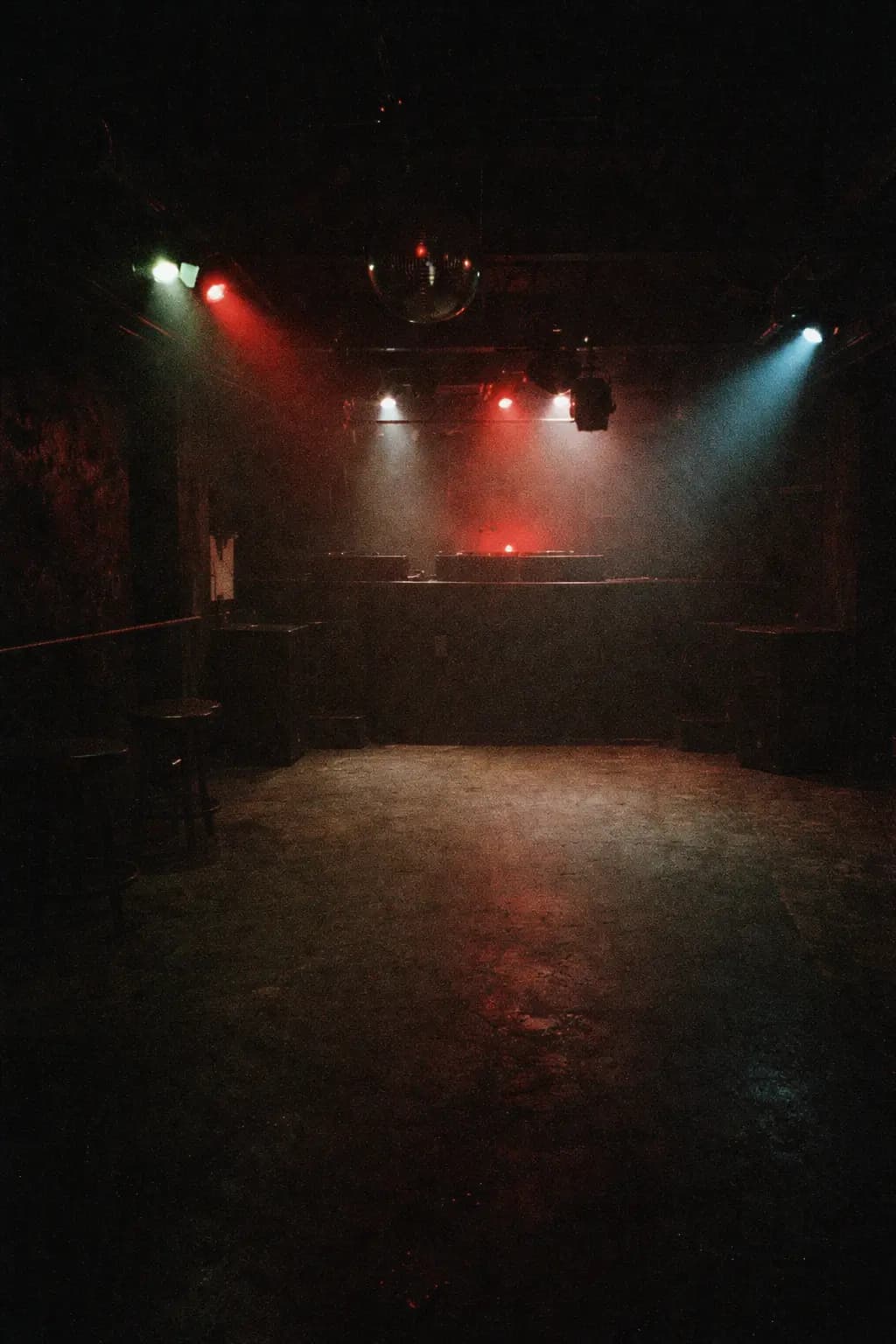
Rominimal, microhouse, late '90s. The story of the sound that inspired Magnifico.
The origins
It all starts before the music. It starts with a dictatorship.
For decades, under Nicolae Ceaușescu's regime, Romania is cut off from the rest of the world. No foreign records, no underground culture, none of what was happening in Detroit, Chicago, Berlin. Electronic music reaches Romania through pirated tapes — copies of copies passed from hand to hand. That's how a generation learns to listen.
When the regime falls in 1989, that generation explodes. The first clubs open, the first DJs start playing. It's a raw scene, built more on enthusiasm than structure. But something is in the air.
Bucharest in the '90s
Club A is one of the few spaces where electronic music finds a home. This is where a young DJ from Galati, Radu Bogdan Cilinca — known as Rhadoo — starts playing in the mid-'90s. Two nights a week, with cassettes. Very few people know him outside the city, but those who listen understand there's something different in his approach.
Around the same time, Catalin Ghinea — nicknamed "Tati," daddy, by those around him — works as an energy drink salesman. He drives across Romania, building a network of contacts with club and disco owners. In 1999 he founds Sunrise Booking. The name comes to him one morning on Celentano beach, as a joke with a friend. He doesn't yet know that joke will become the center of one of the most influential music scenes in Europe.
The first artists on the roster are few: Rhadoo, DJ Raoul, Rosario Internullo. The fees are minimal — around 100 Deutsche Marks a night. It's a labor of love, not money.
Ibiza changes everything
The turning point comes from outside. In 2002, Petre Inspirescu — also known as Pedro — arrives in Ibiza to stay with a friend, Stefan Cosma, who had found work as a photographer for Space. Cosma introduces him to the island's scene and finds him a few gigs at bars and private parties.
It's the summer when minimal techno dominates Ibiza. DC10, then still an after-party venue frequented mostly by Italians on Monday mornings, pushes a precise sound: low tempo, steady groove, few elements in loop. No explosions, no drops. Just slow, continuous movement.
Rhadoo remembers those days: there was a freedom in the music he hadn't encountered before. And above all — very few elements in the tracks. The complete opposite of the progressive house flooding clubs across Europe at the time.
Pedro and Rhadoo start searching for records in this new territory. The timing is right: the arrival of digital DJing software like Serato and Traktor pushes many DJs to sell their vinyl collections. The Vinyl Club in Ibiza, run by DJ Luc Ringeisen, is full of underground records at low prices. The two spend their days digging through crates, spending little, bringing home everything.
Every October they return to Bucharest with packed bags. And the sound of the city changes.
The community forms
Minimal finds fertile ground in Bucharest for a precise reason: Romanian law allowed parties to run for over 48 hours, as long as they didn't disturb the outside. A timeframe like that leaves no room for easy moments. It demands a sound that builds slowly, maintains flow, doesn't exhaust itself in a climax.
Around Sunrise Booking a community forms. Raresh — real name Rareș Ionuț Iliescu, nicknamed "Google" for his encyclopedic knowledge of music — comes from Bacău, where he had started playing in 1999 at 15 in a local disco. He moves to Bucharest in 2003, drops out of chemical engineering school in 2006 to focus on music full time.
Petre Inspirescu joins around the same time, having met Rhadoo through a residency at the Web Club. Together they form the RPR trio — Rhadoo, Pedro, Raresh — which in 2006-2007 founds the Arpiar label, destined to become a worldwide reference for the Bucharest sound.
Others follow: Priku, Barac, Dan Andrei, Cezar, Kozonak, Praslea. Some leave their own cities to move to the capital and be part of this movement. It's not an industry — it's a family with unwritten rules. Those who share the values are welcomed; those who seek personal visibility at the community's expense stay out.
A recognizable sound
Around 2007 the Bucharest sound starts circulating outside Romanian borders. They call it rominimal. Built on hypnotic loops, essential percussion, tension that never explodes. Long tracks. No breaks, no easy moments. Just a flow that develops over time.
The music that comes out is the direct product of how this community learned to listen: in isolation, sharing the same records, the same studio setups, the same production techniques. As Cezar explains: they were all blank canvases, exposed to the same influences at the same moment. The result is a sound with a precise signature, even though it was never designed as such.
Online forums — understand.ro and nights.ro — become spaces for exchange. DJs share recorded sets, tag artists and genres, build an informal network before any industry existed. Some aliases we know today as artist names were originally forum usernames.
Sunwaves and international recognition
The Sunwaves festival, on the Black Sea coast, becomes the place where this community shows itself to the world. A festival that lasts days, with very long sets, in a context that prioritizes listening over consumption. This is where many electronic music fans from across Europe first discover what it means to stay on a dancefloor for 12 consecutive hours without ever wanting to leave.
The reputation of the Bucharest scene grows slowly but solidly. Not through marketing campaigns or media hype, but through the consistent quality of what it offers. Rhadoo becomes an almost legendary figure — he doesn't give interviews, doesn't seek visibility, just plays. Yet videos of his Sunwaves sets circulate worldwide.
The connection to Magnifico
Magnifico is born from this listening.
It's not a copy of the Bucharest scene, nor a nostalgic tribute. It's a project that has internalized that fundamental lesson: music works better when there's space, when it's not overwhelmed by unnecessary elements, when the dancefloor is a place of presence rather than consumption.
Rominimal proved that it's possible to build an international scene starting from a small, tight-knit community with clear values. Magnifico is trying to do the same — on a different scale, in a different context, with its own sound. But with the same intention.